
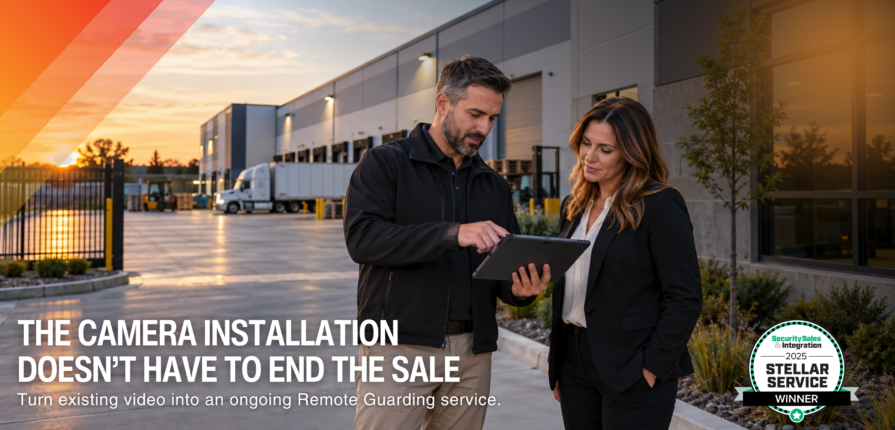
A commercial video project can represent a significant sale for a security dealer. You design the system, install the cameras, configure the equipment, train the customer, and complete the project. Once the installation is finished, however, much of the revenue associated with that camera system may be finished as well. Remote Guarding gives dealers another way to think about that investment.
Instead of video serving primarily as a tool for reviewing what happened after an event, Remote Guarding adds trained monitoring operators who can evaluate live video and respond according to established procedures. Depending on the account, that can include live audio intervention, site-specific escalation steps, and coordination of an appropriate response.
Emergency24 helps dealers put that monitoring component behind commercial video systems, giving customers a more active security service while creating an opportunity for recurring monthly revenue beyond the original installation. The service is designed to work as an additional layer around the video business dealers are already building.
Look at What the Cameras Are Doing Today
Many commercial customers already have extensive video coverage. Cameras may be watching entrances, parking lots, loading areas, storage yards, equipment, or other parts of the property long after employees have gone home.
The first question is not whether the customer needs more cameras. It is what happens when the cameras they already have capture activity that requires attention.
If no one is actively watching, the video may become most useful after an incident has already occurred. Someone reviews the footage, determines what happened, and uses the recording as documentation. Remote Guarding creates a different conversation by adding active monitoring during the periods when the customer wants additional oversight.
For dealers, that creates a reason to revisit video accounts without immediately proposing another equipment project.
The Opportunity May Already Be in Your Account Base
Dealers do not have to wait for a completely new customer to begin selling Remote Guarding. Existing commercial relationships can provide a natural place to start, particularly when cameras are already installed and the dealer understands how the property operates.
A dealership may have a large vehicle lot with limited overnight staffing. A warehouse may have outdoor inventory, trailers, gates, or loading areas that remain exposed after hours. A construction site may have equipment and materials spread across a changing property. Another commercial customer may already be paying for physical guards and looking for ways to extend coverage or reconsider where guard hours are necessary.
Those conversations should begin with the customer’s operation, not with the technology. Useful discovery questions include:
- How is the property protected after hours?
- Who is responsible for watching the cameras?
- What happens when unexpected activity appears?
- Are physical guards or patrol services currently part of the security plan?
The answers can tell you much more about the Remote Guarding opportunity than simply counting cameras.
If you are looking for a monitoring partner that can help you add Remote Guarding to your commercial offering, call Emergency24 at 1-800-800-3624 or contact our team to discuss how the service can fit your business.
Remote Guarding Needs a Clear Operational Plan
Selling Remote Guarding is different from selling another piece of equipment because its value depends on what happens after the system detects activity.
Operators need to understand what they are monitoring, what activity is expected, when intervention is appropriate, and how an event should be escalated. A warehouse with scheduled overnight deliveries will require different instructions from a dealership that expects an empty lot after closing. A construction site may also change as the project advances, requiring the monitoring plan to reflect new access points, work areas, or equipment locations.
The monitoring relationship becomes especially important here. The dealer should be able to concentrate on understanding the customer, designing the video solution, and setting realistic expectations, while the central station supports the operational side with trained operators and clearly defined response procedures.
Emergency24 has made Remote Guarding a current focus in its dealer-growth strategy, including sales resources and support intended to help dealers identify where the service fits and how to introduce it to commercial customers.
Guarding Costs Can Open Another Conversation
Customers using physical guards can also be strong Remote Guarding prospects, but the conversation needs to be handled carefully.
A guard may perform duties that require someone to be physically present on the property, so Remote Guarding should not automatically be presented as a replacement. Instead, the dealer can evaluate what guards are currently responsible for, which areas are difficult to watch consistently, and whether monitored video could supplement that coverage.
In the right application, the customer may be able to reduce certain guard requirements while maintaining the physical presence needed elsewhere. In other cases, Remote Guarding may simply give existing security personnel broader visibility across a large property.
The strongest business case will depend on how the customer is currently protecting the site and what they are trying to improve.
Build the Recurring Service Into the Video Conversation
Remote Guarding does not have to be an add-on introduced months after a camera system goes live.
When a new commercial video project is being designed, ask what the customer expects from those cameras after installation. If after-hours protection, outdoor areas, limited staffing, or guard coverage are already concerns, monitoring can become part of the proposal from the beginning.
For customers with cameras already installed, the dealer can revisit the account with a service that changes how those cameras are used rather than waiting for another equipment replacement cycle.
In either case, the installation can support an ongoing monitoring relationship and another source of recurring monthly revenue.
Choose a Monitoring Partner That Helps You Sell the Service
Adding Remote Guarding requires more than access to a monitoring center. Dealers need a partner that understands what they are selling and can support the service after the customer signs.
That means establishing monitoring procedures, supporting the operators evaluating live video, and working through unusual operating conditions or response requirements with the dealer. The monitoring center also needs to understand that the customer relationship belongs to the dealer and that its role is to support that relationship.
For a prospective dealer evaluating wholesale monitoring providers, Remote Guarding is worth including in the decision. The question is no longer only whether a central station can monitor the services you sell today. It is whether that relationship can support the recurring services you want to add next.
Get More From the Video Business You’re Already Building
You do not need to turn every video customer into a Remote Guarding account. Start with commercial properties where after-hours activity, outdoor assets, guard coverage, or limited staffing create a clear need for more active oversight.
For the right account, Remote Guarding can help the customer get more from the video system already in place while giving the dealer another recurring service to build into the relationship.
If Remote Guarding is part of where you want to take your commercial business, call Emergency24 at 1-800-800-3624 or contact our team to talk about the opportunities you want your monitoring relationship to support.



Leave a Reply