
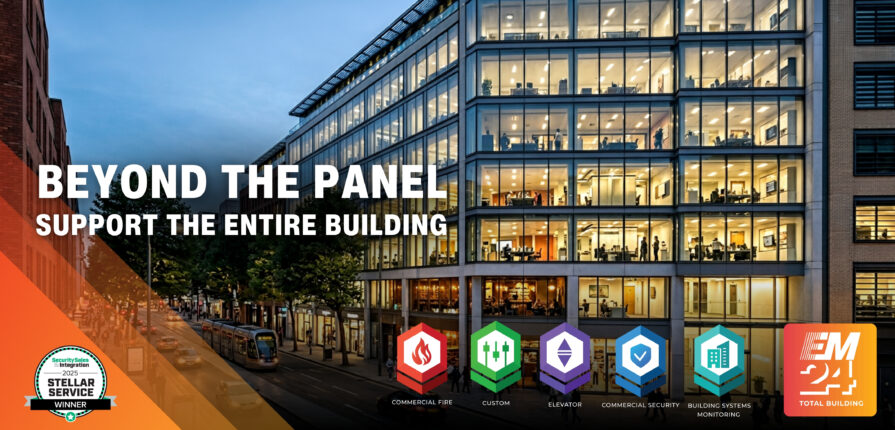
For many alarm dealers, monitoring has traditionally been tied to a specific system, whether that is a fire panel, an intrusion system, or a defined set of signals. That approach still works, but it no longer reflects how most commercial buildings operate.
At Emergency24, this shift is something we see every day as dealers begin moving beyond single-system monitoring and into more complex commercial environments. Buildings are built around layers of infrastructure that require oversight, coordination, and response. As those systems evolve, the role of monitoring begins to shift with them, moving beyond a single point of protection and becoming more closely aligned with how the building functions as a whole.
The difference between monitoring a system and supporting a building is not just technical. It influences how dealers position their services, how they expand within an account, and how customers perceive the value of what they provide.
A System Is a Starting Point
Every commercial account begins with a defined scope, often centered on a fire system or an intrusion panel. The dealer installs the system, connects it to monitoring, and establishes the initial relationship with the customer, often with a central station like Emergency24 supporting that initial layer of protection.
At that stage, monitoring is tied to a single function, where a signal is triggered, the central station responds, and the process follows a defined path.
That structure is familiar and, in smaller environments, often sufficient. In larger commercial properties, however, it represents only part of what is happening inside the building, where multiple systems operate simultaneously and contribute to the overall operation and protection of the space.
Buildings Operate as Connected Environments
As commercial systems expand, they rarely operate in isolation. Fire systems, intrusion detection, video, elevator communication, and building infrastructure all exist within the same property, each serving a different purpose while contributing to how the building functions day to day.
When monitoring is limited to a single system, those connections remain separate. Dealers may be responsible for one layer of protection while other systems are managed independently, often by different vendors. From the customer’s perspective, this creates a fragmented experience where the building is supported in pieces rather than as a coordinated environment, which in turn limits how far the dealer can extend their role within the account.
Monitoring Begins to Follow the Structure of the Building
As dealers move beyond a single system, monitoring begins to align more closely with the structure of the building itself. Instead of focusing on one panel or one type of signal, monitoring expands to cover multiple layers of the property, bringing additional systems into a unified framework.
Fire remains a core component, but video verification adds context around events, remote video guarding introduces active monitoring and real-time response, and systems such as elevator communication and environmental alerts can also be incorporated. As these systems are brought together, monitoring shifts from supporting a single function to supporting how the building operates, creating a more integrated and valuable service.
If you are evaluating how your monitoring strategy can expand beyond individual systems, contact Emergency24 or call 1-800-800-3624 to start the conversation.
The Role of the Dealer Expands With It
This shift directly affects how dealers are positioned within commercial accounts. When monitoring is tied to one system, the dealer’s role is clearly defined but limited, and the relationship is associated with a specific function that can be compared against alternatives.
As monitoring expands across multiple systems, the dealer becomes more integrated into the building. Responsibility extends across multiple layers of the property, each with its own requirements, procedures, and operational impact. That level of involvement changes how the relationship is viewed and makes it more difficult for a competitor to replace the dealer with a single proposal, since the account is no longer tied to a single system.
Remote Video Guarding Is Accelerating the Shift
Remote video guarding highlights how monitoring is evolving. Traditional monitoring responds after a signal is triggered, while remote video guarding allows operators to observe activity, verify events, and respond as situations develop in real time.
This capability moves monitoring closer to the day-to-day operation of the building and changes how services are positioned. Monitoring is no longer limited to responding after an event but becomes part of how the property is actively protected, which aligns with growing expectations around visibility, awareness, and response.
Supporting the Building Requires the Right Infrastructure
Expanding monitoring across multiple systems requires more than simply adding services. Each system introduces different signal types, procedures, and response expectations, all of which must be handled consistently within the same environment.
That includes:
- Fire systems that require strict adherence to established life-safety protocols
- Video systems that depend on context, verification, and accurate interpretation
- Remote video guarding workflows that rely on real-time observation and response
- Building infrastructure signals that introduce additional operational considerations
All of these must function within a single, consistent framework that dealers can depend on without creating operational friction.
Dealers rely on their monitoring partner to support this complexity while maintaining clarity and consistency. Bringing multiple systems into one monitoring environment allows dealers to scale their services while maintaining control, which is essential as commercial environments become more complex.
Emergency24 has built its monitoring operations to support this type of expansion, helping dealers move beyond single-system monitoring and into broader commercial environments.
A Different Way to Look at Growth
Growth is often associated with adding new accounts, and while that approach remains important, expanding within existing buildings creates a different type of opportunity. When monitoring aligns with the structure of the building, each additional system becomes part of a larger relationship that develops over time.
As more systems are integrated, the relationship becomes more stable, more valuable, and more difficult to replace. Monitoring shifts from being tied to a device to becoming part of how the building is supported, which changes how dealers think about long-term growth.
Where This Is Headed
Commercial security continues to move toward more connected environments, where systems that were once separate are expected to work together. Customers are looking for solutions that reflect how their buildings operate rather than isolated services tied to individual components.
Monitoring is moving in the same direction. Dealers who adapt to that shift will be able to expand their role within the buildings they already serve, while those who remain focused on single-system monitoring may find themselves limited as expectations continue to evolve.
To learn how Emergency24 supports dealers as they expand from system-level monitoring to full-building support, contact the Emergency24 team or call 1-800-800-3624.



Leave a Reply